It can be, and the pair is typical. Falling testosterone drags down performance and muscle mass, stress cortisol steers fat to the belly, and insulin resistance locks the fat-burning door. A man over 40 with this combination deserves lab work instead of just training harder, because training more in a dysregulated body makes it worse.
The man arrives at this point thinking the problem is discipline: he trains as much as or more than he did at 30, eats about the same, and the mirror gives back a bigger belly and a smaller arm. So he responds with more training and less food, and gets worse. It is not lack of effort. It is effort applied to a system that changed its rules.
The physics of the problem
- •Falling testosterone means less muscle synthesis per workout. The same stimulus builds less and recovers more slowly. Stalled strength and soreness that lasts for days are the symptom.
- •Chronically high cortisol, from work, bad sleep and overtraining itself, is catabolic: it breaks down muscle and stores visceral fat. Training hard on 5 hours of sleep is asking the body to stockpile belly.
- •Insulin resistance locks the door on fat burning. The belly that grows on little food is its portrait in the making, years before any abnormal glucose reading.
- •And the cycle closes: visceral fat converts testosterone into estrogen, knocking down even further the hormone that would build muscle. A big belly produces a bigger belly.
The mistake of doubling down
More cardio, more restriction and less sleep is the exact recipe for raising cortisol, dropping testosterone further and eating the muscle that is left. The body reads it as scarcity and defends its stores. That is why "more of the same" delivers less of the same result.
What to investigate before changing the training plan
Total testosterone in the morning, confirmed with a second measurement as the guidelines require, with SHBG and free testosterone if needed; fasting insulin with glucose and A1C; TSH and free T4; and sleep investigated for real, because sleep apnea is a silent epidemic in men over 40 with a belly, and it knocks down testosterone every single night. With the map in hand, training starts working again, because it starts working with the physiology instead of against it.
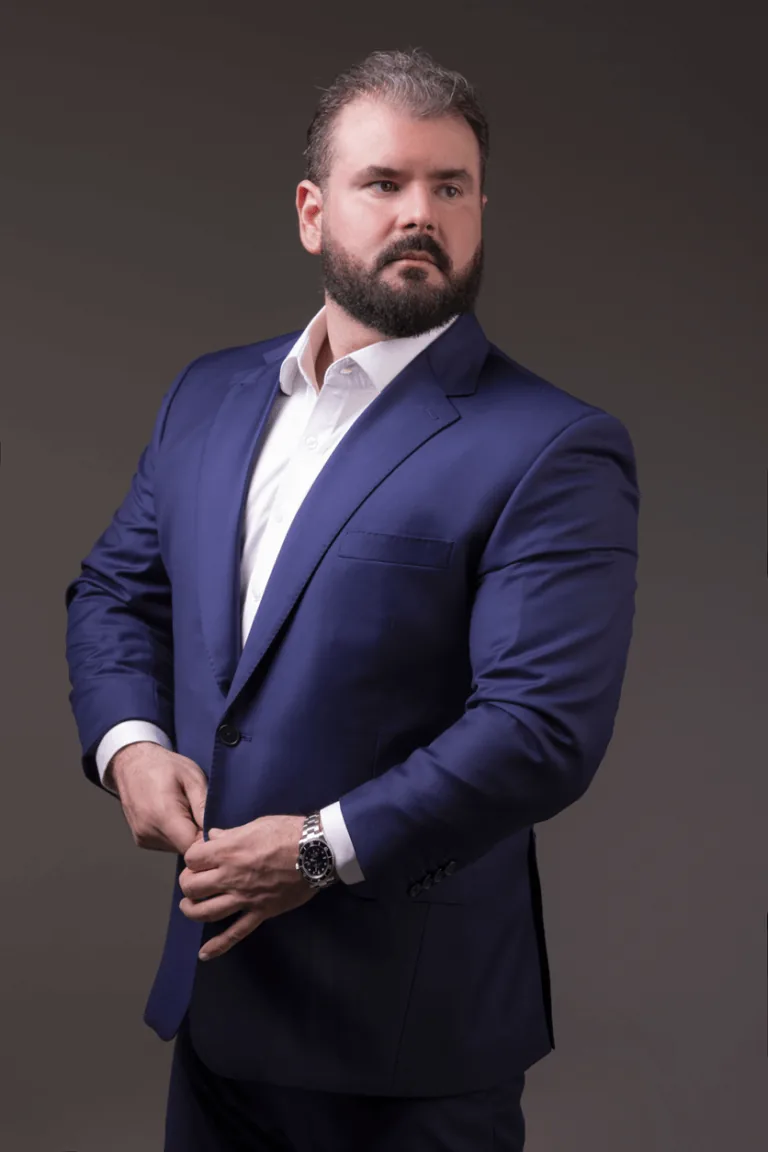
Dr. Diego Rios · CRM-PI 8347 (Brazilian medical license)
Root-Cause Medicine: sleep, hormones, weight and anxiety treated as one system. Creator of the Reactiva Method. Five postgraduate degrees: Family Medicine, Endocrinology and Metabolism, Nutrology, Sports Pharmacology and General Ultrasonography.
The answer is not one more isolated lab test. It is reading the system.
Medicine is one. The body does not divide itself into specialties: the model does. When each symptom goes to a different office and each doctor sees one piece, you spend years circling between referrals, holding reports and missing answers. In that back-and-forth, you lose time and health.
Precise diagnosis and treatment come from the opposite path: understanding everything and going deep into one patient. Sleep, hormones, weight, energy and mind interpreted together, because that is how the body works.
Dr. Diego Rios, CRM-PI 8347
Educational content. It does not replace individual medical evaluation and is not a prescription. Patient care is provided in Portuguese.